Small, common and easy to swim past. Slow down. The dartfish has a story to tell.
by Walt Stearns
The reefs around Wakatobi are home to more than 900 species of fish. With so much to see, common fish like the dartfish are easy to overlook while you search for something rare. That’s a shame, because almost every fish has a story for divers and snorkelers who stop and watch.
The dartfish is a good example. These small fish are common on Wakatobi’s dive sites, but to see one going about its day, you need to approach slowly and quietly. Startled, a dartfish vanishes into a burrow or a gap in the reef in an instant. That habit gave them their name: to dart is to move suddenly and quickly, which is exactly what they do.
Where to Look for Dartfish
Finding dartfish at Wakatobi isn’t hard. Look for a patch of sand or rubble between coral heads, open to the current. The moving water matters. Dartfish feed on tiny zooplankton, and rather than swim around looking for food, they let the current bring it to them.
Depending on the species, you’ll find them alone, in pairs or in small groups, hovering a meter or two above the bottom. They face into the current and hold position with an occasional flick of the tail. Sharp eyes pick out a passing morsel; a quick move left or right, a gulp, and it’s gone.
“Almost every fish has a story for divers and snorkelers who stop and watch.”
Feeding this way means they never stray far from home. Many live in pairs and share a burrow in the sand or rubble, close enough to disappear the moment something looks wrong.
A Fish of Many Names
Dartfish go by a handful of names: dart gobies, dartgobies and gudgeons among them. There are about 60 species worldwide. Males and females look alike, and because they are so shy, much about how they breed is still a mystery. What is known: they lay their eggs inside the burrow, and once the young hatch, they drift off into open water on their own. They settle back onto the reef at about 2.5 centimeters long.
Three Dartfish to Look For at Wakatobi
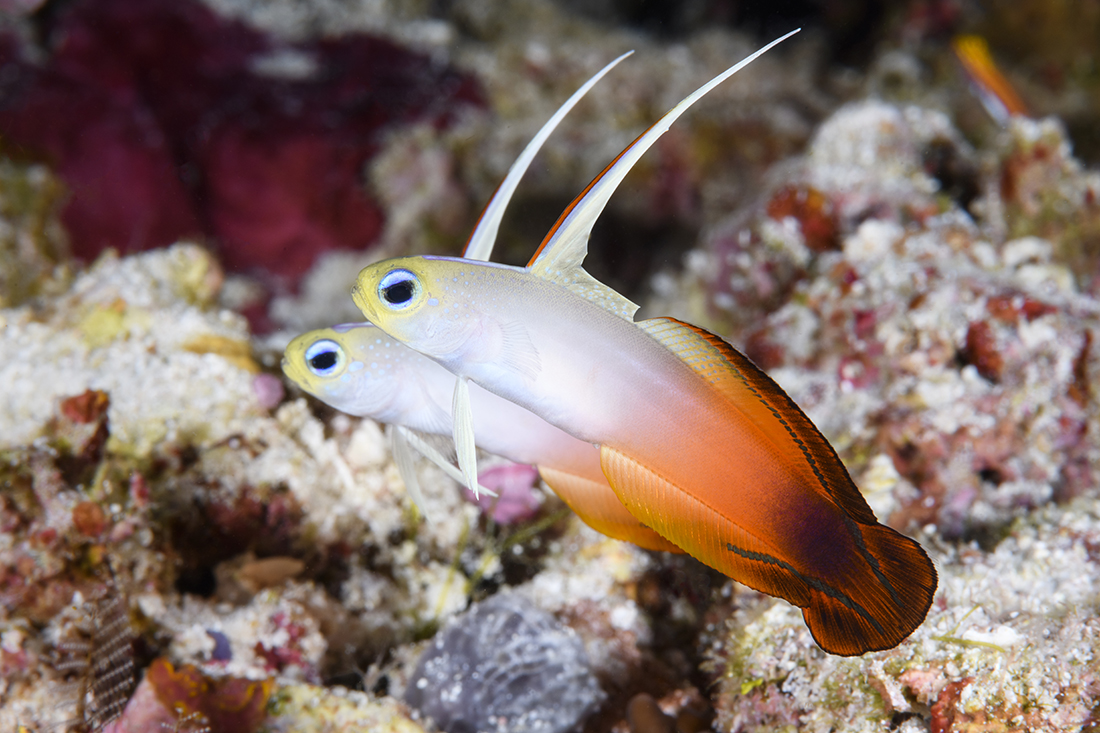
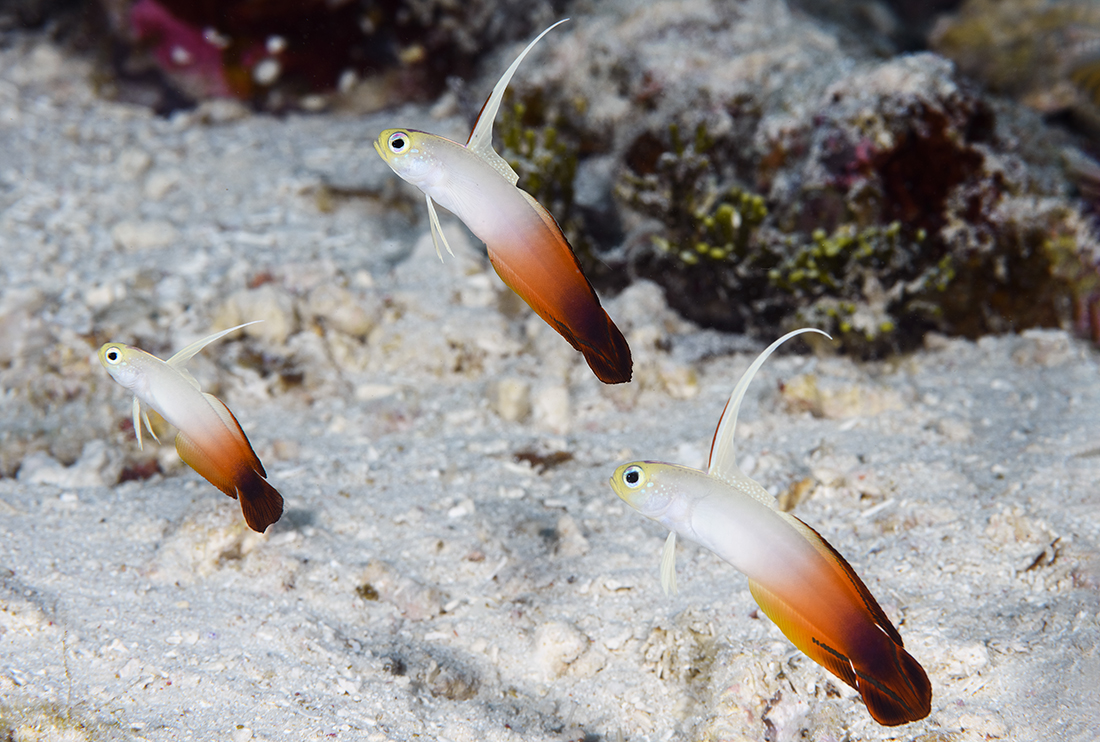
Fire dartfish. Also called the flame dartfish, it’s easy to recognize: a yellow head fading into a white body and a red-orange tail. It grows to about 9 centimeters and flicks its long, pennant-like dorsal fin to signal a partner or others nearby. Look for them in pairs or small groups.
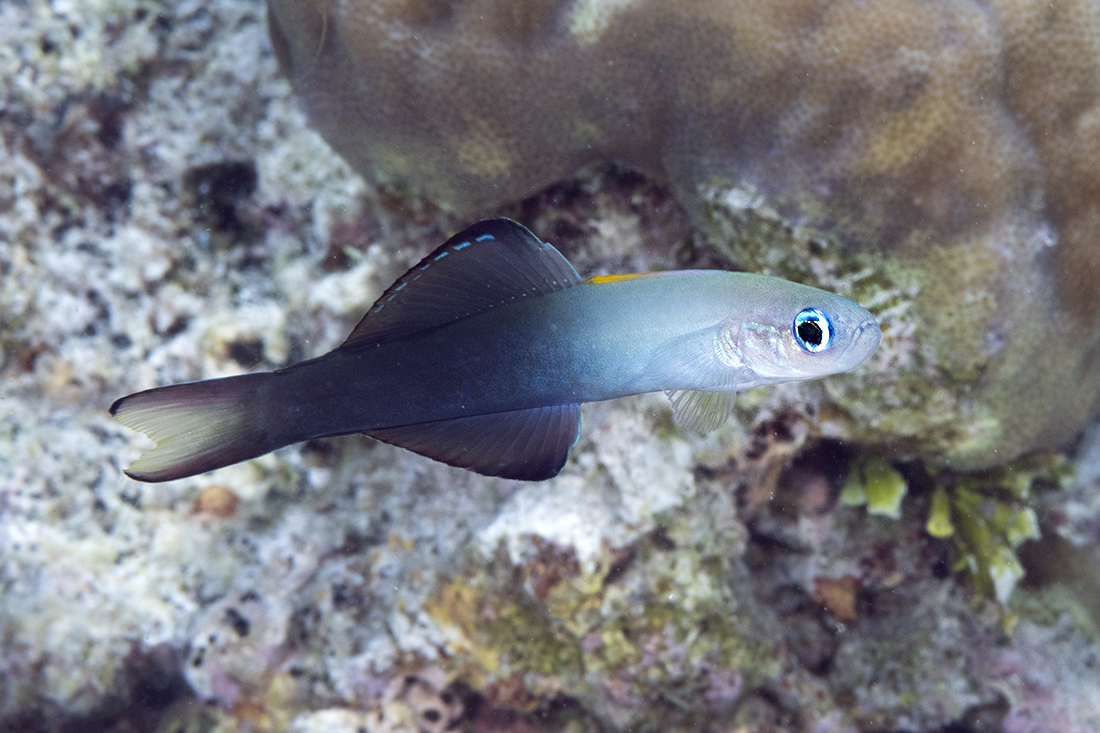
Bicolor dartfish. Also called the two-tone or blackfin dartfish, this is one of the larger species, growing to about 14 centimeters. It’s pale blue-gray at the head, darkening to blue-black toward the tail. It’s often seen in the shallows, and the House Reef is a good place to look, which makes it one snorkelers can find too. (See Back in the Shallows.)
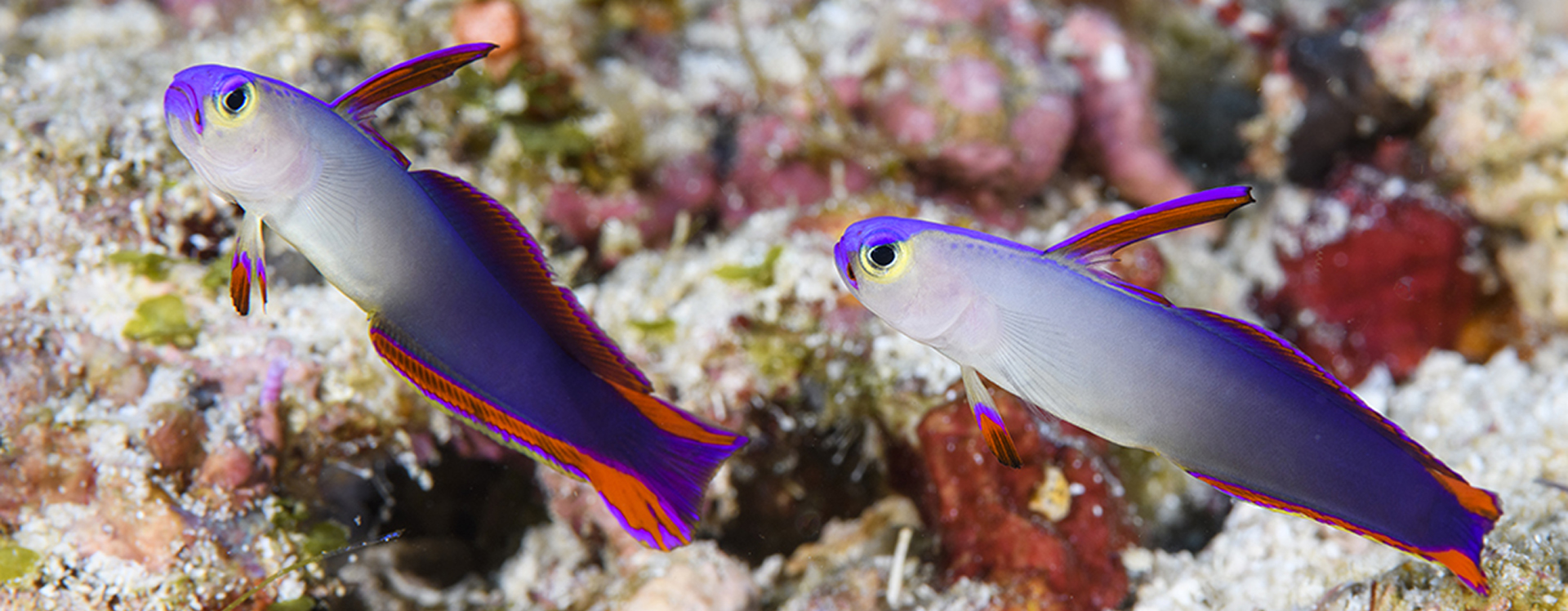
Decorated dartfish. Also known as the elegant firefish, this is the most colorful of the three: purple on the head, a pale body washing into deep purple toward the tail, and fins edged in orange. It usually lives deeper than the others, near the edge of drop-offs where the current runs stronger, so it’s mostly a diver’s find.
Slow Down and Watch
Dartfish are one of hundreds of fish on Wakatobi’s reefs that reward a little patience. Next time you pass a patch of sand, slow down. Something small is probably watching you back.
Plan Your Stay
Email office@wakatobi.com or complete a quick trip inquiry and our team will help you put your trip together.
Follow us on Facebook, Instagram and YouTube.