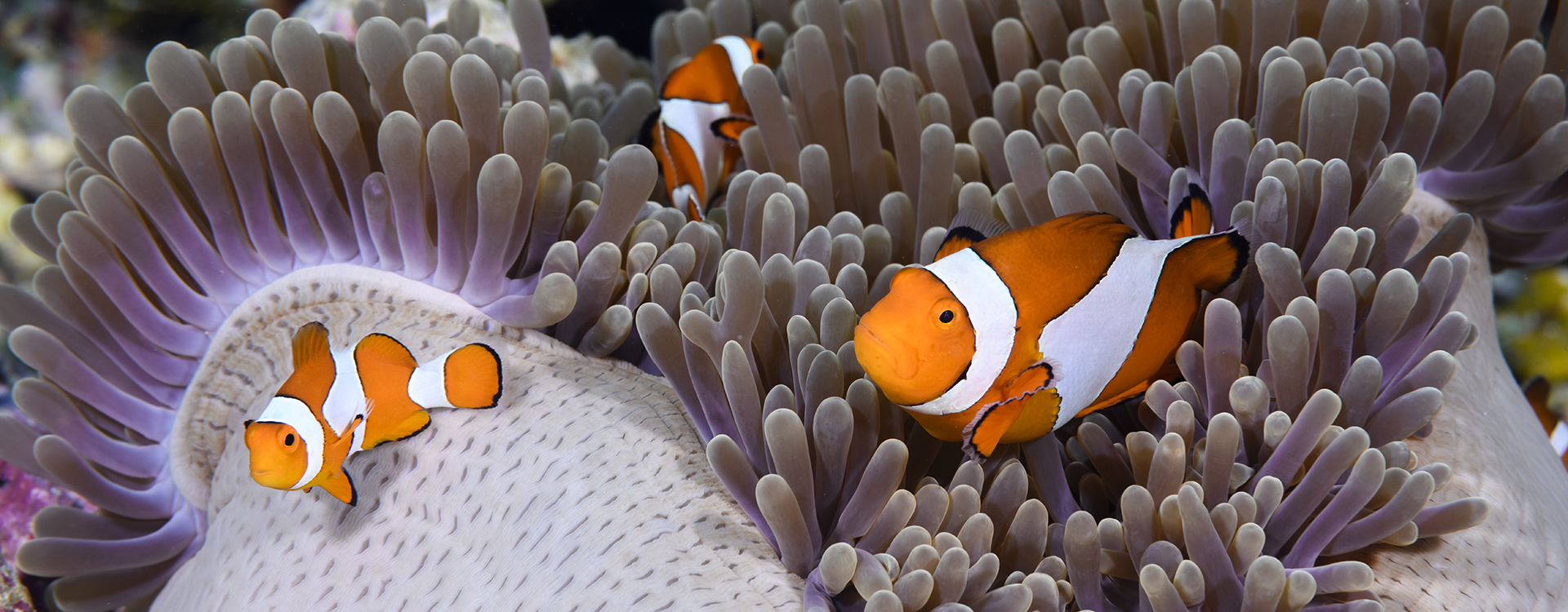
Of the twenty-eight recognized anemonefish species globally, ten call the Wakatobi region home—a stunning diversity that extends far beyond the iconic orange-and-white stripes. This incredible partnership is the reef’s most beautiful example of mutualism: an intimate, long-term symbiosis where both partners benefit.
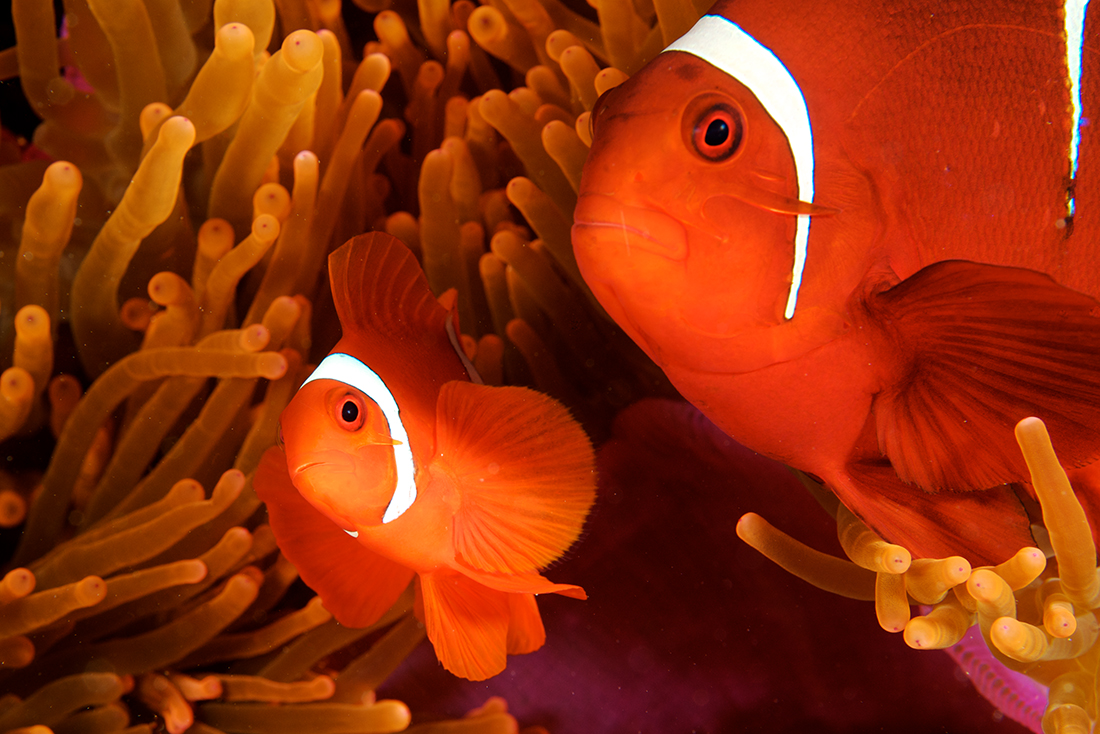
The relationship is one of perfect action, but how exactly do these two distinct species support one another? Let’s take a closer look.
The Anemone is Home Base
Though sea anemones are carnivorous predators, they provide essential shelter. Their tentacles are armed with nematocysts—stinging cells used to stun and capture prey—but anemonefish have a remarkable ability to tolerate these stings.
When threatened by predators like moray eels, snappers, or groupers, the fish dart deep into the anemone’s tentacles, becoming instantly unreachable. Observational studies suggest that this constant protection significantly lowers anemonefish mortality compared with other reef species.
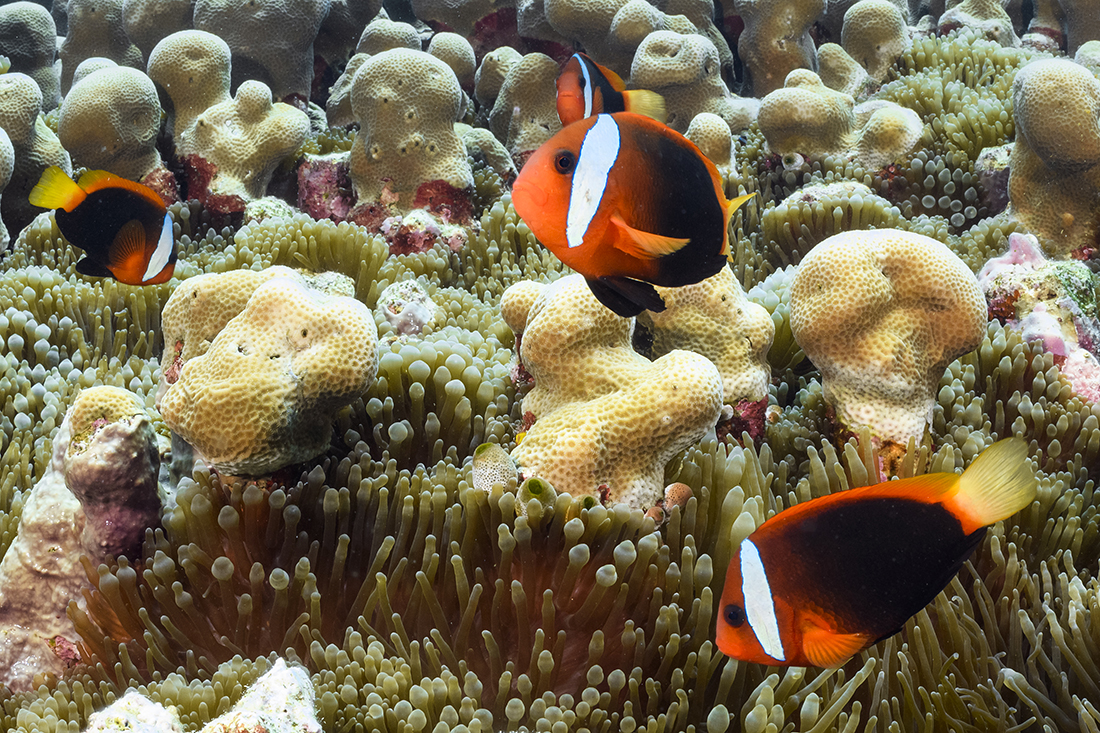
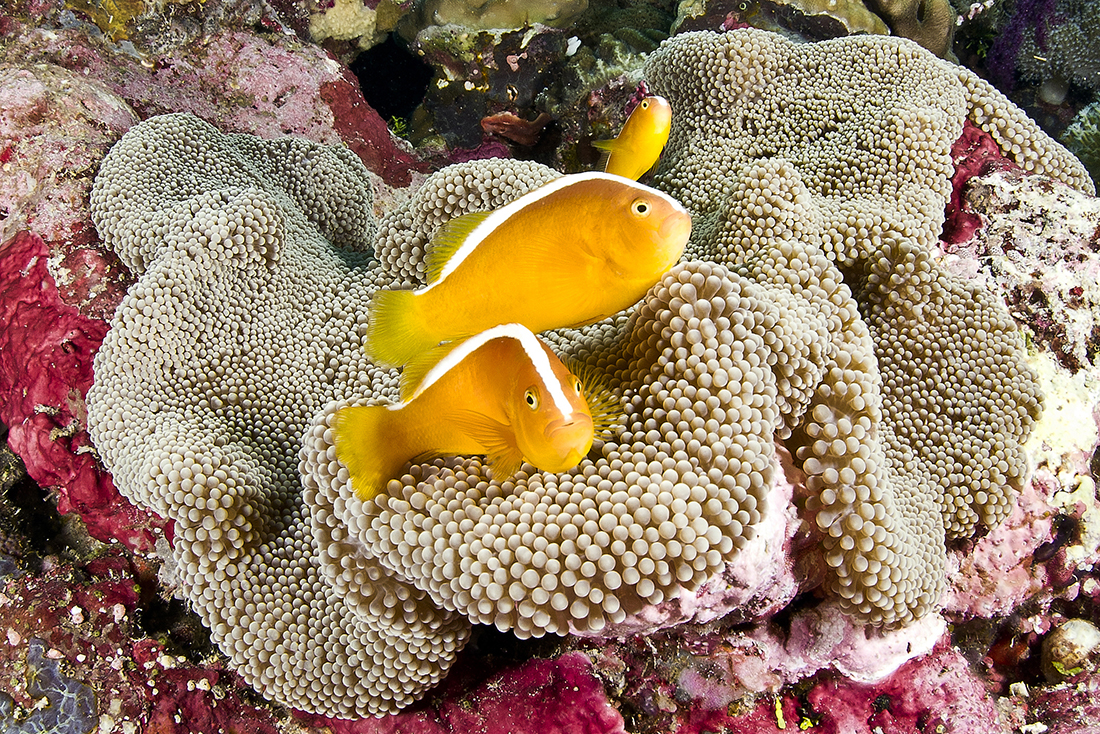
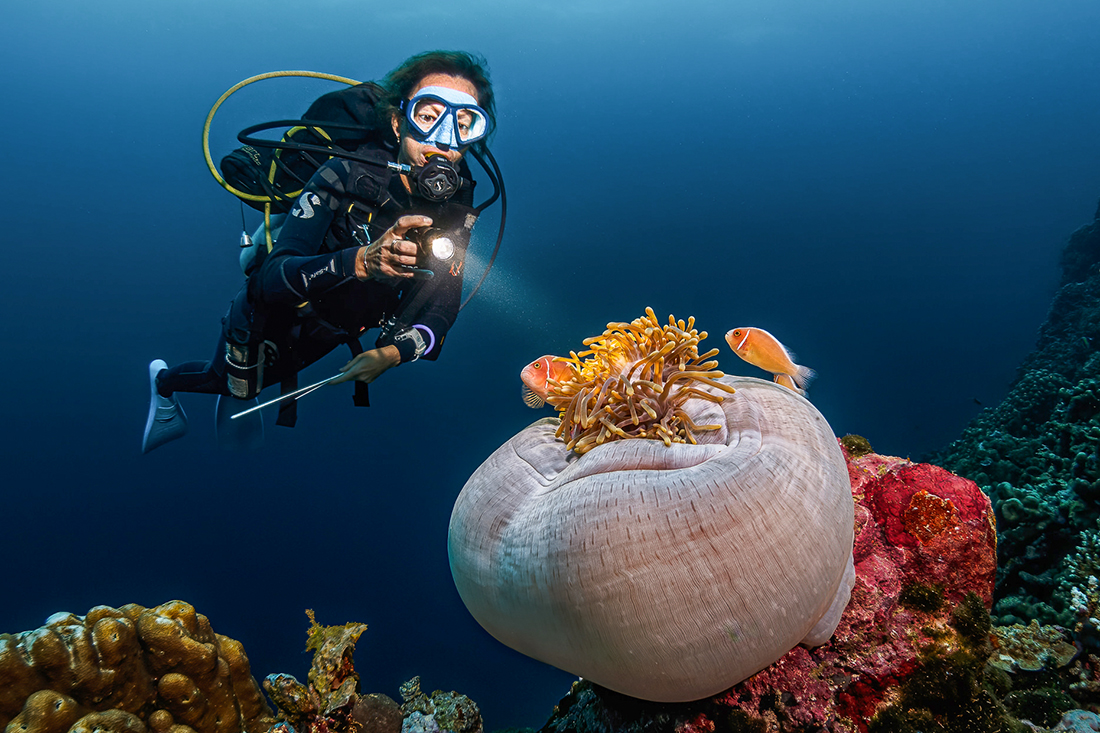
Anemonefish dependency varies greatly. Poor swimmers, such as the iconic False Clownfish and the Pink Skunk Anemonefish, rely heavily on their host, quickly retreating to its safety and rarely straying far. In contrast, more agile species like Clark’s Anemonefish are strong swimmers, often venturing meters away to forage. These independent fish are also more prone to actively defend their eggs and host, sometimes charging—or even nipping—at curious divers!
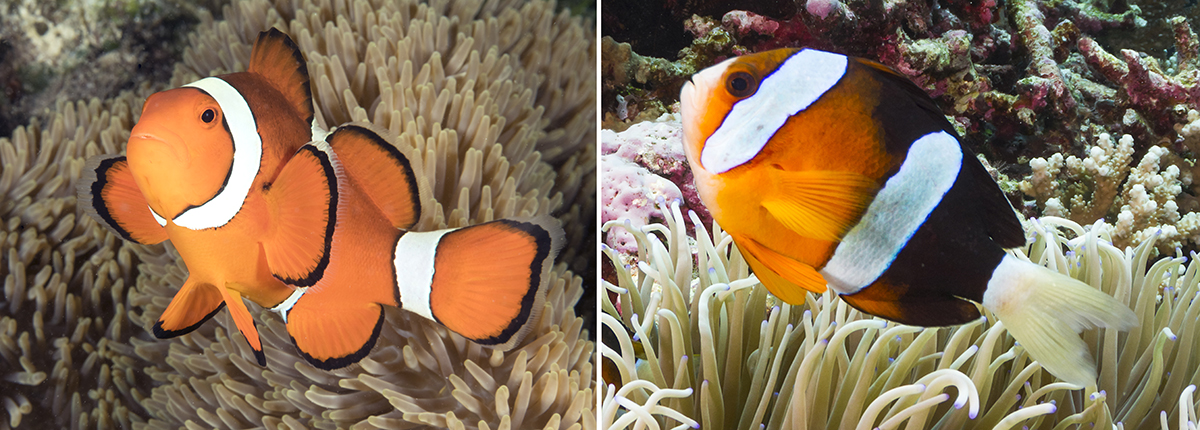
One simple way to gauge a species’ dependency is by looking at its caudal fin (tail fin). Species that rely heavily on their anemone typically have rounded tails, indicating limited swimming ability, while independent species tend to have notched, or emarginate, tails.
Not a One-Sided Deal
While the fish enjoys a safe home, the benefits of this partnership are certainly not one-sided. Sea anemones gain significant advantages from hosting these tenants:
Active Defense: Bigger anemonefish actively guard their homes, warding off threats like large butterflyfish. Without their protection, vulnerable anemones can be quickly attacked, sometimes forcing them to hide deep in the reef to survive.
Nutrition and Growth: The fish’s waste, rich in ammonium, acts as a natural fertilizer for the anemone’s internal algae, or zooxanthellae. This nitrogen source allows the algae to photosynthesize more efficiently, producing extra food and supporting faster growth and even asexual reproduction (fission) for the anemone.
Housekeeping: As the fish flits amongst the tentacles, it gently keeps the anemone open, sweeps away debris, and circulates oxygen-rich water. With more tentacle surface exposed to sunlight, the zooxanthellae can photosynthesize at full capacity, generating even more energy for the host.
Tiny But Powerful
This partnership is a textbook example of mutualism: the fish gets essential shelter, and the anemone benefits from defense, fertilization, and a bit of housekeeping. It is a vital biological contract where each species plays a fundamental, dependent role.
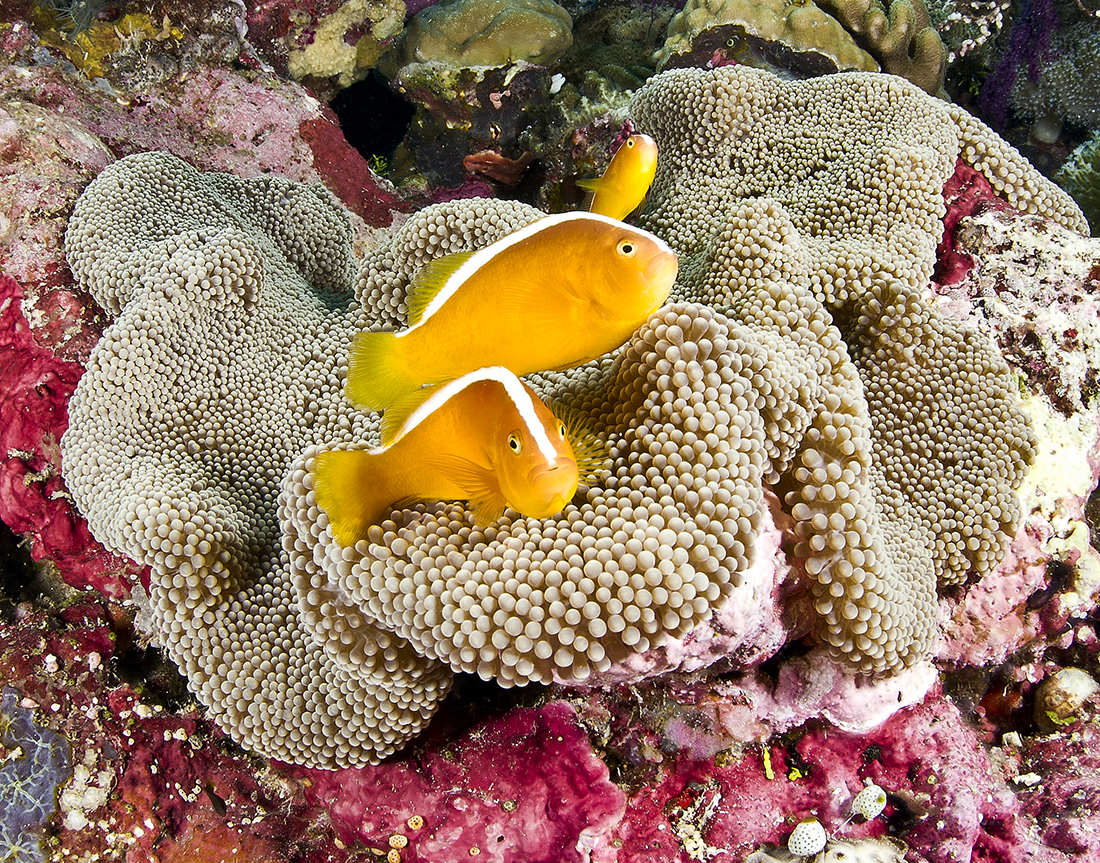
The next time you’re diving or snorkeling Wakatobi’s reefs, take a moment to watch an anemonefish snuggling among the tentacles and appreciate this tiny but powerful alliance—and remember that your presence helps protect this entire ecosystem.
CONTACT US.
Email: office@wakatobi.com or Enquire.
Follow us on Facebook and Instagram.
View Wakatobi conservation videos on our YouTube Channel.